Customer Relationship Management (CRM)
Customer Relationship Management (CRM) System with Location Detection, Attendance System, Company Management, and Client Handling
The Customer Relationship Management (CRM) System is an innovative solution tailored for organizations aiming to enhance their customer relationships, manage employee attendance, and efficiently oversee company operations. This CRM integrates location detection technology, attendance tracking, company management features, and effective client handling capabilities, enabling businesses to foster better relationships with clients and streamline internal processes.
Key Features
1. User-Friendly Interface
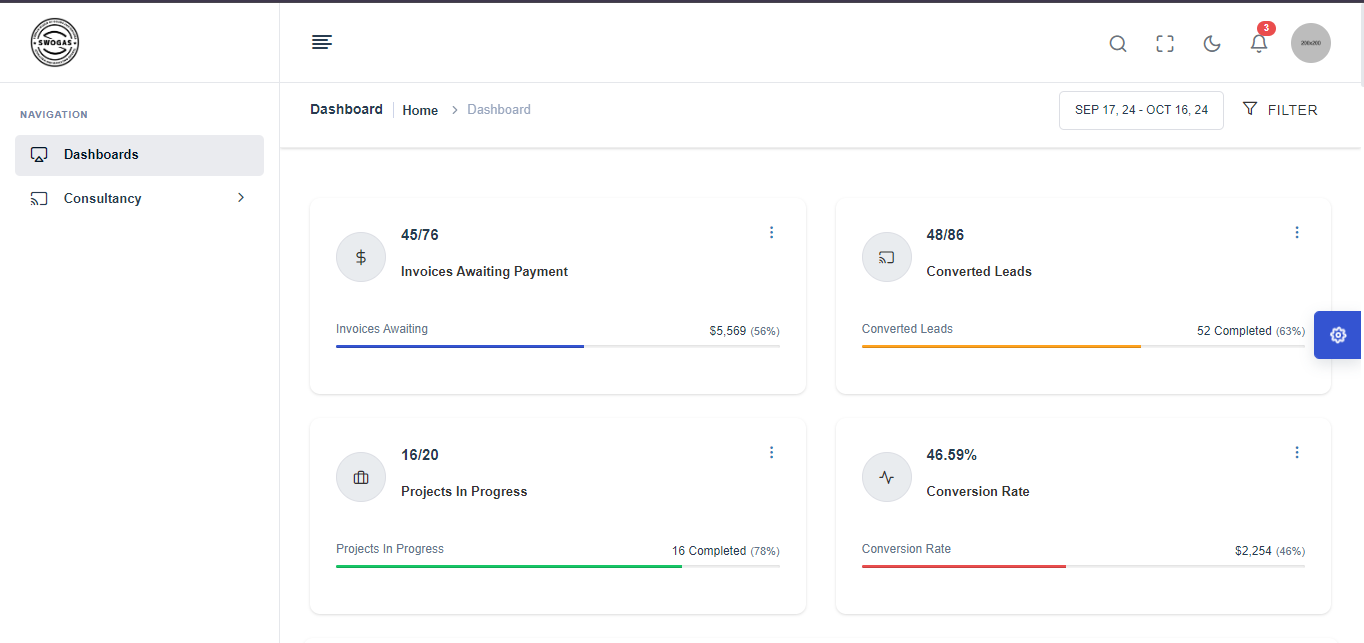
- A modern, intuitive dashboard that allows users to easily navigate through customer profiles, attendance records, and management tools.
2. Location Detection
- Geolocation Tracking: Utilize GPS technology to track employee locations in real-time, ensuring accurate attendance and monitoring field staff effectively.
- Location-Based Services: Provide tailored services and offers to clients based on their geographical location, enhancing customer engagement and satisfaction.
- Geofencing Capabilities: Set up virtual boundaries to trigger alerts and notifications when employees enter or leave specific areas, ensuring accountability in field operations.
3. Attendance Management System
- Check-In/Check-Out Feature: Employees can log their attendance via mobile devices or web applications, utilizing GPS to confirm their location at the time of attendance.
- Attendance Reports: Generate reports on attendance patterns, absences, and punctuality, providing insights into employee reliability and performance.
- Notifications and Alerts: Automated notifications for managers regarding attendance-related issues, such as late check-ins or missed shifts.
4. Company Management Features
- Employee Profiles: Maintain comprehensive profiles for each employee, including personal details, attendance history, performance metrics, and training records.
- Role-Based Access Control: Assign different access levels to users based on their roles (admin, employee, manager), ensuring data security and privacy.
- Performance Tracking: Monitor employee performance through key performance indicators (KPIs) and feedback, enabling targeted development and training.
5. Client Handling and Management
- Customer Profiles: Store detailed profiles for each client, including contact information, interaction history, preferences, and feedback.
- Communication Logs: Track all interactions with clients, including emails, calls, and meetings, providing a comprehensive view of the client relationship.
- Lead and Opportunity Management: Efficiently manage leads and sales opportunities, from initial contact through to conversion, ensuring no opportunity is missed.
- Follow-Up Reminders: Automated reminders for follow-ups and client meetings, ensuring timely communication and relationship management.
6. Sales and Marketing Automation
- Campaign Management: Create, manage, and analyze marketing campaigns to engage clients effectively.
- Email Automation: Automate email communications for marketing campaigns, follow-ups, and notifications to keep clients informed.
- Sales Forecasting: Utilize analytics to forecast sales trends and make informed decisions based on historical data.
7. Analytics and Reporting
- Custom Reports: Generate reports on sales performance, attendance statistics, and customer engagement metrics based on specific criteria.
- Dashboards: Visual dashboards provide real-time insights into business performance, employee attendance, and client relationships.
8. Mobile Compatibility
- The CRM is fully responsive, enabling employees and clients to access features from any device, including smartphones and tablets, enhancing usability and convenience.
9. Integration Capabilities
- Third-Party Integrations: Seamlessly integrate with other systems such as email marketing tools, accounting software, and HR management systems for streamlined operations.
- API Access: Provide API access for custom integrations and data exchange with external applications.
Technologies Used
- Frontend Development: Employ modern web technologies like HTML, CSS, JavaScript, and frameworks like React.js or Vue.js to create an engaging and responsive user interface.
- Backend Development: Use PHP (Laravel), Python (Django), or Node.js to handle server-side logic, database interactions, and user authentication.
- Database Management: Utilize MySQL, PostgreSQL, or MongoDB for secure storage of client and employee data, attendance records, and sales information.
- Cloud Hosting: Deploy the CRM on cloud platforms like AWS, Google Cloud, or Azure to ensure scalability, reliability, and performance.
Benefits of the CRM System with Location Detection and Attendance
Improved Customer Relationships: The CRM enhances communication and engagement with clients, leading to stronger relationships and higher customer satisfaction.
Enhanced Attendance Tracking: The integrated attendance system streamlines attendance management, reducing administrative burdens and enhancing accountability among employees.
Efficient Client Handling: Comprehensive client profiles and communication logs enable personalized interactions, fostering loyalty and repeat business.
Data-Driven Decision Making: Analytics and reporting tools provide insights into customer behaviors, sales trends, and employee performance, enabling informed decision-making.
Increased Productivity: Automation features reduce manual tasks, allowing employees to focus on building relationships and closing sales.
Cost-Effective Operations: The CRM system reduces the need for multiple software solutions, consolidating various functions into a single platform, minimizing costs.
Scalability: The CRM can grow with the organization, easily accommodating additional users, clients, and features as needed.
Flexibility and Accessibility: Mobile compatibility allows employees and clients to access the CRM from anywhere, promoting flexible work arrangements and enhancing engagement.
Conclusion
The Customer Relationship Management (CRM) System with Location Detection, Attendance System, Company Management, and Client Handling is an essential tool for organizations looking to enhance customer interactions and streamline operations. By integrating location tracking, attendance management, and client handling features, this CRM provides a comprehensive solution that empowers businesses to foster strong client relationships while efficiently managing internal processes.
Organizations can improve employee accountability, enhance customer satisfaction, and make data-driven decisions, ultimately driving growth and success. This CRM represents a significant advancement in customer relationship management and operational efficiency, making it a valuable asset for any organization.
Visit CRm Portal: https://crm.swogas.com/
working Customer Relationship Management (CRM) Process
1. Planning & Requirement Gathering
- Objective: Understand the product goals, user needs, and technical requirements.
- Activities:
- Meet with stakeholders to define business objectives and user expectations.
- Gather functional and non-functional requirements (features, performance, security, etc.).
- Gather functional and non-functional requirements (features, performance, security, etc.).
- Define timelines, budgets, and resources.
- Outcome:
- A well-defined project scope with a development roadmap and timeline.
2. Design Phase
This phase focuses on the user experience and interface design.
- Activities:
- Wireframes: Create low-fidelity layouts focusing on functionality and structure.
- Prototypes: Develop interactive prototypes to simulate user interactions.
- UI/UX Design: Finalize high-fidelity designs, applying branding and aesthetics.
- Tools: Figma, Adobe XD, Sketch
- Outcome:
- Approved design mockups and prototypes ready for development.
3. Development Phase
The product is coded and developed in this phase.
- Activities:
- Frontend Development: Develop the user interface using HTML, CSS, JavaScript, React,Vue, etc.
- Backend Development: Build the server-side logic and APIs using frameworks (Laravel).
- Database Management: Set up and manage databases (MySQL).
- Version Control: Use Git for tracking changes and collaboration.
- Agile/Scrum Methodologies: Implement sprints to divide the project into manageable tasks.
- Outcome:
- Functional product with frontend, backend, and database integrations in place.
4. Testing & Quality Assurance (QA)
Testing ensures the product is free from bugs and meets the requirements.
- Activities:
- Unit Testing: Test individual components or functions.
- Integration Testing: Ensure that different modules work together smoothly.
- User Acceptance Testing (UAT): Test with end-users to validate functionality. (MySQL).
- Performance Testing: Check speed, scalability, and load handling.
- Outcome:
- Identified and resolved bugs, and the product is validated for launch.
5. Deployment
The product is released to a live environment where users can access it.
- Activities:
- Set up servers, domains, and cloud infrastructure (AWS, Azure, or DigitalOcean).
- Deploy the code to production environments.
- Run final tests on the production server to ensure everything works smoothly.
- Outcome:
- The product is live and accessible to users.
6. Maintenance & Support
After deployment, continuous monitoring and updates are needed.
- Activities:
- Bug Fixes: Monitor for issues reported by users or through logs.
- Updates & Enhancements: Add new features or improve existing functionality.
- Performance Monitoring: Ensure uptime, speed, and reliability.
- Technical Support: Assist users with any issues they face.
- Outcome:
- Product remains functional, updated, and aligned with evolving user needs.